
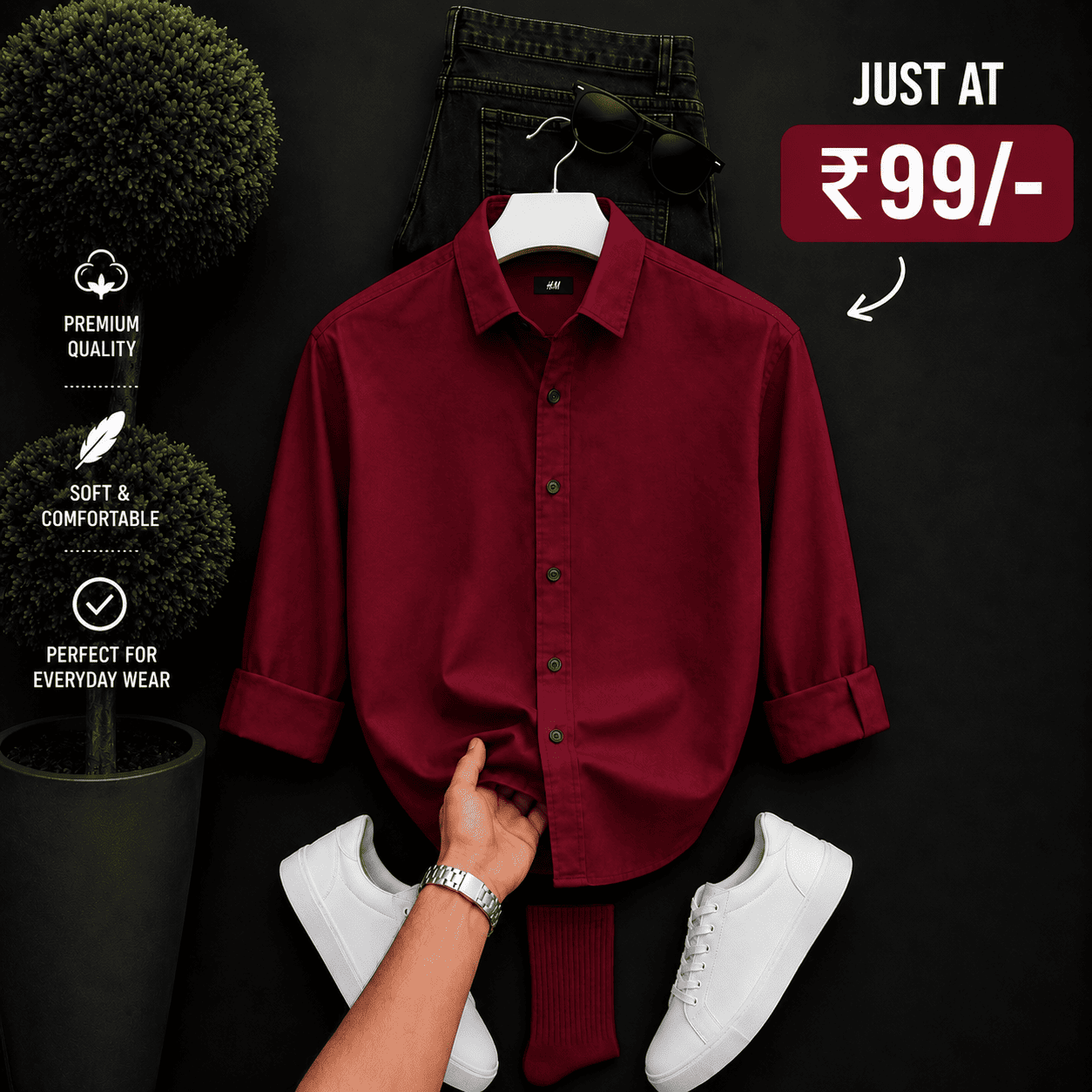
Neutral button-downs in white, navy, and grey often dominate men’s wardrobes. While neutrals are safe and practical, building a genuinely versatile wardrobe requires a few deliberate statement pieces that command visual presence without looking chaotic.
The men’s red full sleeve shirt fills this role naturally.
Red is energetic, confident, and expressive. Yet, many men hesitate to wear it, fearing it might appear overly loud, difficult to match, or out of place. When cut from the right fabric and balanced against muted neutrals, a red button-down shirt becomes a powerful asset for weekend gatherings, smart-casual dinners, festive occasions, and contemporary creative workplaces across India.
This comprehensive guide covers color theory, fabric choices suitable for Indian climates, foolproof trouser combinations, and practical care steps to keep your red shirt rich and vibrant wash after wash.
Mastering the Undertones: Finding the Right Red for Your Complexion
Not all red shirts carry the same visual weight. Selecting the right shade of red depends primarily on fabric texture, undertones, and your personal skin tone. Most Indian skin complexions feature warm, golden, or olive undertones, which pair exceptionally well with deeper, grounded reds.
Crimson and Ruby Red: Balanced, rich reds that sit comfortably between warm and cool tones. These shades are versatile, working equally well for evening dinner plans and daytime social events.
Oxblood, Maroon, and Burgundy: Deeper, darker variations infused with brown or blue undertones. These are the easiest shades to incorporate into business-casual and evening formal settings because their reduced saturation mimics traditional neutral tones.
Scarlet and Cherry Red: High-saturation, warm reds. These work best in casual outdoor settings, daytime summer outings, or textured weaves like Oxford cloth, which soften the reflective shine of the fabric.
Fabric Architecture: Balancing Breathability, Drape, and Texture
In India’s varied and often humid climate, fabric construction directly determines how a red shirt looks and feels. Because red makes an immediate visual statement, choosing a low-quality, synthetic fabric can result in an unflattering synthetic shine. Natural fibers and intentional weaves elevate the overall aesthetic.
| Fabric / Weave Type | Formality Level | Breathability | Best Setting & Season | Crease Resistance |
| Oxford Cloth (OCBD) | Moderate (Smart-Casual) | High | Daily wear, café outings, Fridays at work | High (Thick, textured basketweave) |
| Giza / Supima Cotton Poplin | Smart-Casual to Semi-Formal | High | Dinners, evening networking, date nights | Moderate (Smooth drape; needs pressing) |
| Cotton-Linen Blend | Casual to Smart-Casual | Exceptional | Humid summers, daytime events, travel | Low (Soft natural character creases) |
| Cotton Twill or Flannel | Casual to Evening Smart | Moderate | Autumn/winter evenings, road trips | High (Heavier drape, soft surface) |
Fit Architecture: Slim Fit vs. Regular Tailored Fit
Slim Fit: Tapered along the chest, waist, and sleeves. This cut works best when tucking the shirt into tailored chinos or dark trousers for evening outings and smart-casual dinners.
Regular Tailored Fit: Offers 1.5 to 2 inches of natural ease across the torso and armholes. This is optimal for warmer weather, casual unbuttoned overshirt styling, or relaxed weekend outings where comfort and air circulation are top priorities.
5 Foolproof Outfit Combinations for Men
1. The High-Contrast Evening Look (Red & Black)
The Pairing: Combine a rich crimson or deep red full sleeve shirt with slim-fit jet black chinos or clean, non-distressed black jeans.
Footwear & Accessories: Black leather Chelsea boots or minimalist black loafers. Add a leather-strap watch with a minimal silver or gunmetal dial.
Why It Works: Black grounds the vibrancy of red instantly. It creates a sleek, contemporary contrast that feels polished and purposeful for dinner dates, cocktail parties, and lounge settings.
2. The Smart-Casual Balance (Red & Khaki/Beige)
The Pairing: Tuck a structured red Oxford or cotton shirt into flat-front beige, sand, or camel chinos. Leave the top collar button open.
Footwear & Accessories: Dark chocolate brown leather penny loafers or suede driving moccasins, accompanied by a matching brown leather belt.
Why It Works: Earthy beige neutralizes red’s intensity, resulting in a balanced, warm outfit that fits smart-casual office settings, creative client meets, and daytime family gatherings.
3. The Classic Weekend Casual (Red & Indigo Denim)
The Pairing: Wear a red button-down shirt untucked over dark indigo or deep blue denim. Roll the sleeves up to the mid-forearm using a clean master sleeve roll.
Footwear & Accessories: Low-top, clean white leather sneakers and a casual canvas-strap watch.
Why It Works: Dark indigo denim complements the warmth of red without competing for attention, producing an approachable, reliable look for weekend outings and road trips.
4. The Modern Minimalist Layer (Overshirt Style)
The Pairing: Wear an Oxford or cotton-linen red shirt unbuttoned over a heavyweight plain white or heather-grey crew-neck t-shirt. Pair with charcoal grey chinos or straight-fit washed black jeans.
Footwear & Accessories: Retro-style court sneakers or neutral suede slip-ons.
Why It Works: Leaving the shirt unbuttoned breaks up the red fabric, allowing it to function as a visual frame for the neutral base layer underneath.
5. Contemporary Festive Smart (Indo-Western Fusion)
The Pairing: Layer a solid red twill shirt under a charcoal, midnight navy, or textured raw-silk Nehru jacket (Bandhgala vest). Pair with off-white or charcoal tailored trousers.
Footwear & Accessories: Dark brown leather Jodhpur boots or textured ethnic slip-ons.
Why It Works: The red collar and cuffs deliver a calculated pop of festive color against the structured, darker vest, making it ideal for festive dinners and wedding parties.
Trouser Color Coordination Cheat Sheet
When wearing a bold primary shade like red, the bottom half of your outfit should always provide balance:
Top Choices (Safe & High-Impact): Jet Black, Charcoal Grey, Stone, Deep Indigo Blue.
Warm Earth Tones (Sophisticated & Soft): Camel, Beige, Sand Khaki, Taupe.
Understated Colors (Subtle Contrast): Slate Grey, Olive Green (opt for muted, dusty olive rather than vibrant green to avoid looking like a holiday costume).
Tones to Avoid: Bright white trousers (unless intentionally styling a high-contrast resort look), neon shades, and competing bold primary colors like bright yellow or royal blue.
Wash, Care, and Dye-Preservation Protocols
Red cotton dyes are notorious for color bleeding and surface fading if washed improperly. To keep your shirt from looking tired or turning adjacent laundry pink, follow these practical maintenance rules:
First-Wash Precaution: Always wash your red shirt separately for its first cycle. Even high-grade reactive dyes can release excess surface pigment during their initial contact with water.
Turn Garments Inside Out: Protect the outer face of the cotton fabric from mechanical friction inside the washing drum, which breaks microscopic fibers and causes a dull, fuzzy appearance.
Use Cold Water Only: Warm or hot water expands natural cotton fibers, allowing dye molecules to escape rapidly. Stick to cold water cycles (30°C or below) alongside mild, color-safe liquid detergents.
Avoid Harsh Bleaches and Powder Detergents: Never use chlorine bleach or optical brightening detergents on colored garments. Optical brighteners deposit microscopic particles designed to make whites appear bluer, leaving chalky, faded patches on saturated fabrics like red.
Dry in the Shade: Direct sunlight acts as a natural bleaching agent that degrades red pigment rapidly. Hang the shirt on a contoured wooden or plastic hanger in an airy, shaded area.
Press on the Reverse Side: Iron the shirt inside out on a medium cotton setting with gentle steam. Applying direct high heat to the outer surface can cause seam shining and uneven fabric color.
9. Frequently Asked Questions (FAQs)
Q1: Can I wear a red shirt to an office or corporate job interview?
In traditional corporate environments (such as law firms, public accounting, or investment banking), a bright red shirt is generally considered too loud; crisp white, soft pink, or light blue are preferred. However, in modern creative agencies, tech firms, startups, and business-casual workplaces, a red shirt paired with neutral trousers works well. For formal meetings, darker shades like wine, oxblood, or maroon are the most professional options.
Q2: What color shoes look best with a red shirt and black trousers?
Black leather dress shoes, black Chelsea boots, or clean white leather sneakers work best with a red shirt and black trousers. Avoid light tan shoes in this combination, as the three-way color contrast between red, black, and light tan can feel disjointed.
Q3: Can a red shirt be worn with navy blue trousers?
Yes, but the key is balance. Dark navy trousers create an anchor for a red shirt, evoking a classic collegiate aesthetic. Stick to deep navy rather than bright royal blue to avoid clashing color temperatures.
Q4: Should a red shirt be worn tucked or untucked?
This depends on the hemline. If the shirt has a long, curved tail designed for formal wear, keep it tucked into your chinos or trousers. If the shirt features a shorter, gently curved or straight hem that falls mid-zipper on your pants, it can be worn untucked for casual and weekend settings.
Q5: How do I stop a red shirt from fading after several washes?
Wash the shirt inside out in cold water, use a dedicated liquid detergent designed for dark or colored clothes, avoid harsh spin cycles, and dry it away from direct sunlight.
Q6: What kind of jacket can I layer over a red shirt?
Structured dark jackets work best. Excellent options include charcoal or navy tailored blazers, black leather or suede bomber jackets, and dark denim jackets. Muted outerwear frames the red shirt cleanly, preventing the outfit from feeling overwhelming.

Reviews
There are no reviews yet.